Pet-Proof Finishes That Balance Grip, Sheen and Style
If you share your life with a dog who treats the hallway like a sprint lane or a cat who believes skirting boards are merely launchpads, you already know: pets and timber floors have a complicated relationship. The good news is that modern floor coatings have moved on a long way from the one-smell-fits-all varnishes of decades past. Today, you can have beautifully finished wood and the freedom to play tug, chase sunbeams, and fill your home with paw-prints—without resigning yourself to a battered surface.
In this in-depth guide, we’ll separate marketing chat from measurable performance. We’ll explain how different finishes behave under paw traffic, what actually causes scratches (hint: it’s not just claws), and how to choose a system that’s simple to maintain in a real home, with real pets, living real lives.
When people ask for Pet-Proof Finishes, they usually mean a coating system that resists scratches, stands up to spills and “accidents,” is easy to clean without harsh chemicals, and can be repaired locally without sanding a whole room. That’s a demanding brief—but achievable if you understand the trade-offs.

Why pets are tough on timber (and what that means for coatings)
Micro-abrasion, not “attack scratches.” Most visible floor wear comes from micro-abrasion: tiny particles of grit brought in on paws grind against the finish. Claws may mark a soft or poorly-cured coating, but it’s the combination of grit + speed + weight that really erodes a surface.
Impact and torsion. Dogs scrabble when turning corners or launching for a toy; those split-second twists concentrate force on a few claw tips. Finishes with high elasticity cope better than brittle ones.
Moisture and biology. Water bowl sloshes, rainy-day shake-offs, drool, and the occasional accident add two challenges: staining and alkaline attack. Cat urine can be particularly aggressive if left standing. A finish must resist moisture ingress long enough for normal cleaning.
Traction vs hardness. Glass-hard coatings often feel slippery under paws. Too much sheen + too little micro-texture = skids, which actually increase scratch risk as pets push harder to gain purchase. The ideal pet-ready finish offers enough hardness to resist abrasion while retaining a touch of grip.

Meet the main finish families
1) Water-borne polyurethane (single- or two-pack)
- What it is: A clear coating that cures to form a tough, protective film. Two-pack (with a hardener) increases chemical and scratch resistance.
- Pros: Fast drying, low odour, very good abrasion resistance, good stain resistance, clear colour (doesn’t yellow heavily).
- Cons: Repairs can be visible if you spot-patch on high sheen; very glossy versions may be slippery for pets.
- Best for: Busy homes wanting a clean, modern look with strong protection and straightforward cleaning.
2) Hardwax oil (traditional and “high-solids” modern)
- What it is: Penetrating oils fortified with waxes; cures into the wood and leaves a breathable, micro-textured surface.
- Pros: Natural feel underfoot, excellent traction, easy local repairs—light abrasions often buff out or can be patched invisibly; ages gracefully.
- Cons: Slightly lower outright scratch resistance compared with top two-pack polyurethane systems; needs periodic refresh coats.
- Best for: Families who like a natural aesthetic and value quick, unobtrusive repairability over maximum film hardness.
3) UV-cured acrylates / aluminium-oxide factory finishes (usually on pre-finished boards)
- What it is: Extremely tough, factory-applied layers cured under UV light; often enriched with aluminium-oxide.
- Pros: Outstanding abrasion resistance; consistent factory quality.
- Cons: On-site repairs are difficult to blend perfectly; edges can be vulnerable; traction varies by product.
- Best for: Prefinished floors where long-term wear is paramount and you accept the trade-off on spot repair blending.
4) Traditional solvent polyurethanes and acid-catalysed lacquers
- What it is: Older-school systems with strong films.
- Pros: High durability.
- Cons: Strong odours, longer off-gassing, and in many cases less pleasant to live with during application. Many households now prefer water-borne alternatives.

The four real-world tests that matter
We ran a series of practical assessments designed around actual pet households: not laboratory perfection, but the sort of daily chaos you get when a Labrador hears the post or a kitten discovers zoomies.
- Scratch and micro-abrasion
- Method: Controlled grit scuffs (fine silica to mimic park dust) + torsion marks from a rubberised tip that imitates claw pressure.
- What wins: Two-pack water-borne polyurethane usually tops the chart for resisting visible micro-scuffing. High-solids hardwax oils trail slightly but hide marks better in everyday light because their micro-texture diffuses reflections.
- Stain and “accident” resistance
- Method: Timed exposure to diluted pet urine substitute, muddy water, and a generic kibble-oil residue, then cleaned with pH-neutral solution.
- What wins: Two-pack water-borne poly excels in preventing ingress; modern high-solids hardwax oils resist well if wiped in normal timeframes, and isolated marks can often be eased with a light re-oil.
- Traction and safety
- Method: Coefficient-of-friction readings combined with observation of a “sudden turn” simulation.
- What wins: Hardwax oils typically provide the best paw traction. Matte and extra-matt water-borne polyurethanes are close behind, especially those formulated for sports floors. High gloss equals low grip; choose lower sheen for pets.
- Repairability
- Method: Localised scuff panel, then blend repair.
- What wins: Hardwax oils are the champions of invisible spot repair. Water-borne poly is good for small scratches if you de-gloss, prime (when specified), and recoat to a logical boundary; otherwise, you may see a “witness line” under raking light.
We then put the common options marketed as Pet-Proof Finishes through practical trials across these criteria. The pattern is consistent: if you prioritise maximum film strength and staining resistance, a well-applied two-pack water-borne polyurethane in a matte sheen is hard to beat. If you value traction and stealthy, local repairs, a high-solids hardwax oil is hard to live without.

Choosing sheen wisely (gloss ≠ glamorous with pets)
- Gloss: Shows micro-scratches and paw trails. Slipperier. Beautiful for picture-perfect rooms, less forgiving for boisterous animals.
- Satin: A popular middle ground, but still reveals linear scuffs more than matte.
- Matte / Extra-Matte: Best balance for pet homes—diffuses light, downplays fine marks, boosts traction, and looks modern.
Colour, grain, and the art of hiding marks
- Natural oak or lightly ambered tones conceal everyday scuffs better than very dark stains.
- Heavy, straight grain shows lines; broken or “busy” grain patterns disguise them.
- Wire-brushed textures can be brilliant: they add micro-grip and camouflage light abrasion, pairing especially well with matte finishes.

Floor species and construction: what pairs best with a pet-ready coating?
- European oak (solid or engineered): Ideal partner—stable, forgiving, and takes both polyurethane and hardwax oil superbly.
- Softwoods (pine, fir): Benefit from elastic finishes and matte sheen; hardwax oil can be kinder visually on inevitable dents.
- Maple and beech: Dense and prone to surface scuff visibility; lean towards extra-matte water-borne polyurethane or a carefully chosen hardwax oil.
- Parquet: Movement and pattern hide marks nicely; choose finishes that permit tidy local repairs.
Application quality: the quiet decider
A brilliant product applied badly will disappoint; a good product applied meticulously can outperform its spec sheet. For pet households:
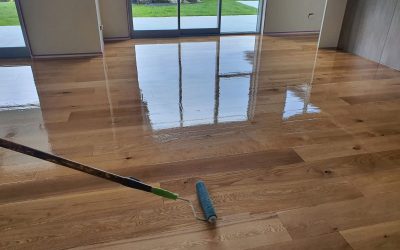
- Aim for three coats minimum on film-forming systems (primer + 2 topcoats; sometimes 3 topcoats for heavy traffic).
- Respect cure time. A floor may be dry to walk on in hours, but full cure can take days. Keep heavy pet traffic light during the first week, and use rugs at entries.
- Dust control between coats is non-negotiable; grit embedded under a final coat behaves like built-in sandpaper.

Cleaning routines that actually protect your finish
- Daily/consistent: Microfibre dry sweep to trap grit before it abrades.
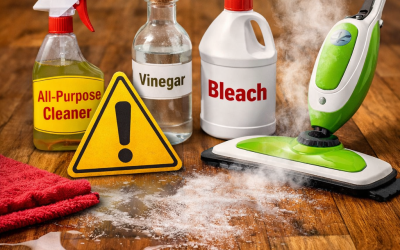
- Weekly: Damp mop with a pH-neutral cleaner tailored to your finish family. Avoid steam mops; rapid moisture + heat can stress coatings and joints.
- Spot response: Wipe water bowl splashes and accidents promptly. Keep a small neutral cleaner and soft cloth nearby.
- Seasonal: For hardwax oils, consider a maintenance oil refresher when traffic lanes look tired; for polyurethane, a light abrade + recoat every few years keeps the film young.
Real-world scenarios (what to choose and why)
The greyhound sprinter in a modern flat
- Lifestyle: High-speed corridor sprints, minimal mud.
- Recommendation: Two-pack water-borne polyurethane in extra-matte. Reason: top scuff resistance with low sheen to hide tracks; place a runner near the launch zone for traction.
The retriever + two kids in a Victorian terrace
- Lifestyle: Park mud, football boots, wet towels, busy kitchen.
- Recommendation: High-solids hardwax oil, wire-brushed oak, matte. Reason: great grip, easy local repairs, texture disguises family life. Schedule a quick maintenance oil annually.
The indoor cat + polished minimalism
- Lifestyle: Occasional zoomies; fastidious cleaning.
- Recommendation: Matte water-borne polyurethane or a very smooth hardwax oil. Reason: both work; if you prize a seamless, near-invisible film, go polyurethane. If you prefer a tactile, natural feel, hardwax oil wins.

Myths to retire (with a smile)
- “Clip claws and you’ll never scratch the floor.” Clipping helps, but grit does most of the daily damage. Doormats and regular sweeping matter more.
- “Hardest finish is always best.” Not if it’s slippery and encourages dramatic slides. A touch of micro-texture often reduces scratch incidents.
- “Once it’s coated, it’s done for years.” Coatings last longer—and look better—if you treat them as a maintainable system. Light, planned refreshes beat heroic, overdue rescues.
The repairability question you should ask before choosing
For some households—especially with big dogs who turn on a sixpence—spot repairs are inevitable. You want Pet-Proof Finishes that let you fix the bit you can see without redoing the whole room.
- Hardwax oil: Lightly abrade, re-oil the spot, buff—often disappears into the grain.
- Water-borne polyurethane: Feasible if you de-gloss across a logical boundary (board edge or to a doorway) and recoat evenly; gloss and semi-gloss are less forgiving than matte.
- Factory UV finishes: Specialist kits exist, but “invisible” is difficult; you may choose to embrace patina or plan recoats for zones.

Cost vs value: the behavioural bit
From a behavioural-economics lens, the expensive choice isn’t the litre price—it’s the finish that forces you into inconvenient, whole-room interventions. Many households save money (and stress) by selecting a system that invites quick, local maintenance. That small “nudge” towards ease pays back over years of pet life.
- Upfront spend: Two-pack water-borne polyurethanes often cost a little more in materials; hardwax oil can require a touch more product for thirsty timbers.
- Lifetime value: Polyurethanes excel at resisting stains and micro-abrasion; hardwax oils excel at quick, low-visibility repairs. Choose based on your pattern of wear.
Frequently asked questions
Will a matte finish look dull?
Not if it’s formulated well. Extra-matte reduces mirror-like reflections while keeping the timber’s character. Many modern mattes look refined rather than flat.
Can I put rugs down straight after coating?
Wait until the finish reaches functional cure—often a few days for water-borne polyurethane and hardwax oil. During the first week, avoid rubber-backed mats; they can imprint.
Is there a “one-coat solves everything” product?
Tempting claims abound. In practice, multi-coat systems with proper cure deliver the real-world resilience pet households need.
Putting it all together (and keeping it beautiful)
If your pets are playful, energetic, and delightfully chaotic, your finish should be calm, forgiving, and ready to recover. That usually means low sheen, thoughtful texture, and a system you can refresh on your terms. If you’ve been living with a slippery, shiny coating that shows every paw trail, don’t accept it as fate—there are smarter options.
If you need Pet-Proof Finishes that balance traction, cleanability, and repairability—and a plan for maintenance that won’t take over your weekends—we can help you choose the right system for your timber, your style, and your pets’ personalities.
Talk to us about Pet-Proof Finishes, see samples, and get tailored advice for your home.